
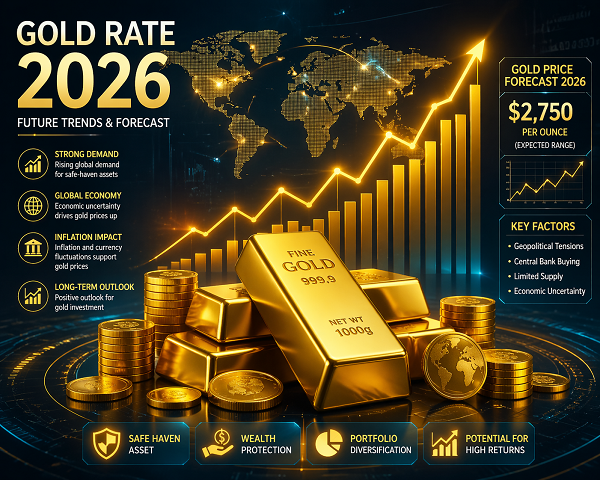
Gold Rates 2026: Market Trends & Forecast
Gold Rates and Global Market Conditions in 2026
Introduction
Gold Rates 2026 has always held a unique position in the global economy. From being a symbol of wealth and security to acting as a hedge against inflation and financial instability, the precious metal continues to attract investors worldwide. In 2026, the gold market is experiencing significant volatility, influenced by geopolitical tensions, central bank policies, and macroeconomic shifts.
This article explores the current gold rates, global market conditions, key factors affecting prices, and future predictions to help investors and readers understand where the gold market is heading.
Current Gold Rates in 2026
As of early April 2026, gold prices are fluctuating in a wide range due to global uncertainty. Recent data shows:
- Gold trading around $4,300 – $4,700 per ounce
- Recent peak above $5,600 per ounce earlier in 2026
- Short-term volatility with rapid gains and sharp corrections
In March 2026, gold recorded one of its biggest monthly declines in over a decade, falling nearly 11–12% before stabilizing again.
Despite these fluctuations, gold remains historically high compared to previous years.
Why Gold Prices Are So Volatile Right Now
1. Interest Rates and Inflation
One of the biggest drivers of gold prices is interest rates:
- Higher interest rates → gold becomes less attractive
- Lower interest rates → gold demand increases
In 2026, rising inflation and expectations of tighter monetary policy have pressured gold prices downward.
2. Strength of the U.S. Dollar
Gold is priced in U.S. dollars globally. When the dollar strengthens:
- Gold becomes more expensive for other countries
- Demand decreases
This inverse relationship has been a key reason for recent price corrections.
3. Geopolitical Tensions
Global conflicts, including tensions in the Middle East, have had a mixed impact:
- Initially pushed gold prices higher
- Later caused liquidation and volatility
Interestingly, gold did not behave like a traditional safe haven during recent conflicts, which surprised many investors.
4. Central Bank Activity
Central banks are major players in the gold market.
- Countries like Brazil, China, and Turkey are increasing gold reserves
- Some nations are selling gold to manage economic pressure
For example, Brazil significantly increased gold holdings in 2025, making it a key reserve asset.
Overall, central bank demand remains a strong long-term support for gold.
Global Demand for Gold
Gold demand comes from several sectors:
1. Investment Demand
- ETFs, bullion, and coins
- Investors buying during dips
2. Jewelry Demand
- Strong in countries like India, China, and the Middle East
- Daily gold rate changes influence buying decisions
3. Industrial Use
- Electronics and technology sectors
- Smaller share but growing steadily
Gold Market Trends in 2026
Trend 1: High Volatility
Gold is no longer moving in a straight upward trend. Instead:
- Sharp rises followed by corrections
- Increased speculation in the market
Trend 2: Central Bank Buying Boom
Central banks are purchasing gold at record levels:
- Over 1,000 tons annually in recent years
- Shift away from reliance on the U.S. dollar
This trend supports long-term price growth.
Trend 3: De-Dollarization
Many countries are reducing dependence on the U.S. dollar and increasing gold reserves:
- Seen as a safer long-term asset
- Helps stabilize national economies
Trend 4: Investor Behavior Changing
Unlike the past:
- Gold is not always rising during crises
- Investors are diversifying into multiple assets
Gold Price Predictions (2026–2027)
Market experts have mixed but generally positive forecasts:
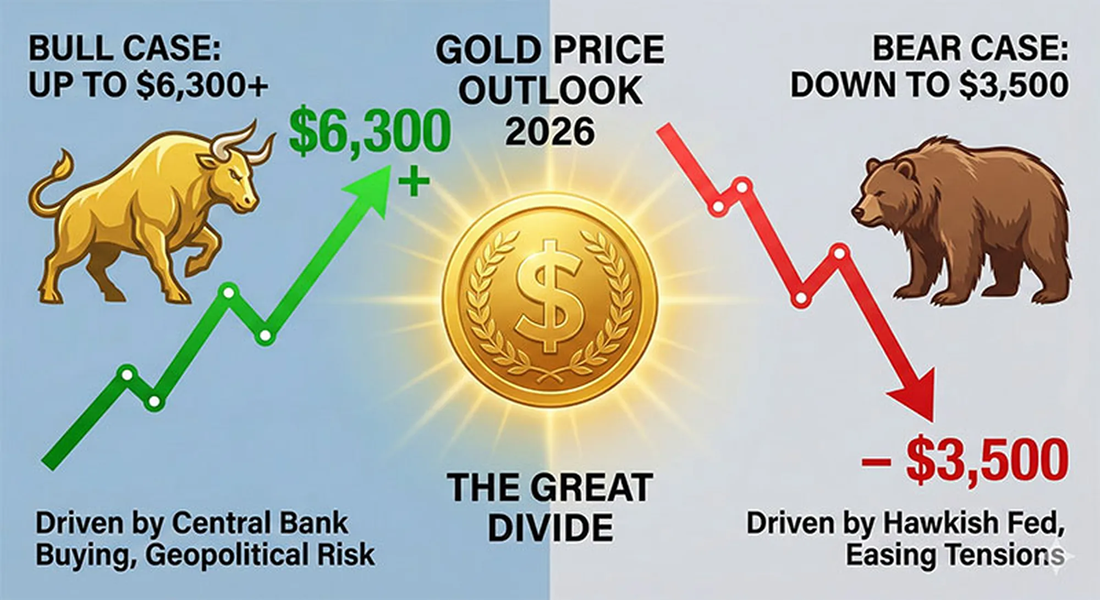
- Average forecast: around $4,700 per ounce in 2026
- Bullish predictions: up to $5,000–$6,000+ per ounce
- Long-term target: $5,400+ possible by 2027
Some analysts remain cautious, suggesting possible short-term declines before long-term growth resumes.
Is Gold Still a Good Investment in 2026?
Pros:
✔ Safe-haven asset during uncertainty
✔ Protection against inflation
✔ Strong central bank demand
✔ Long-term upward trend
Cons:
❌ Short-term volatility
❌ Sensitive to interest rates
❌ Not always reliable during crises
Overall, gold remains a strong long-term investment, but short-term traders must be cautious.
Gold Market Outlook
Looking ahead, the gold market is expected to remain dynamic:
Bullish Factors:
- Central bank buying
- Global debt increase
- Economic uncertainty
Bearish Factors:
- High interest rates
- Strong dollar
- Market speculation
Experts believe gold will likely consolidate at high levels before making another upward move.
Conclusion for Gold Rates 2026
The global gold market in 2026 is defined by volatility, uncertainty, and opportunity. While prices have experienced sharp ups and downs, the long-term outlook remains positive due to strong demand from central banks and investors.
For readers and investors on readsinfo.com, the key takeaway is simple:
👉 Gold is no longer a “slow and steady” asset
👉 It is now a dynamic market requiring smart timing and strategy
Whether you are investing, trading, or simply tracking gold rates, staying informed about global trends is essential in today’s fast-changing financial landscape.
🔗 INTERNAL LINKS (For Your Website)
- https://readsinfo.com/latest-iran-usa-war-update-current-situation-global-impact-escalation/
👉 Anchor text: global economic impact of war - https://readsinfo.com/petrol-diesel-price-in-world
👉 Anchor text: global fuel price trends - https://readsinfo.com/online-earning-in-pakistan
👉 Anchor text: economic trends and income opportunities
🌍 OUTBOUND LINKS (High Authority – IMPORTANT)
👉 Use these (Google trust increase):
- https://www.worldbank.org
👉 Anchor: global economic data - https://www.gold.org
👉 Anchor: gold market trends and analysis - https://tradingeconomics.com/commodity/gold
👉 Anchor: live gold prices worldwide - https://www.reuters.com/markets/commodities/
👉 Anchor: latest gold market news






So dive in, have fun
Regards,