How to Learn Python Fast: Beginner Guide
Introduction How to learn Python fast is one of the most popular questions among students, beginners, freelancers, and future software developers. Nowadays, Python has become one of the world’s most widely used programming languages because it is simple, powerful, and beginner-friendly. As a result, millions of people are learning Python for web development, artificial intelligence,…
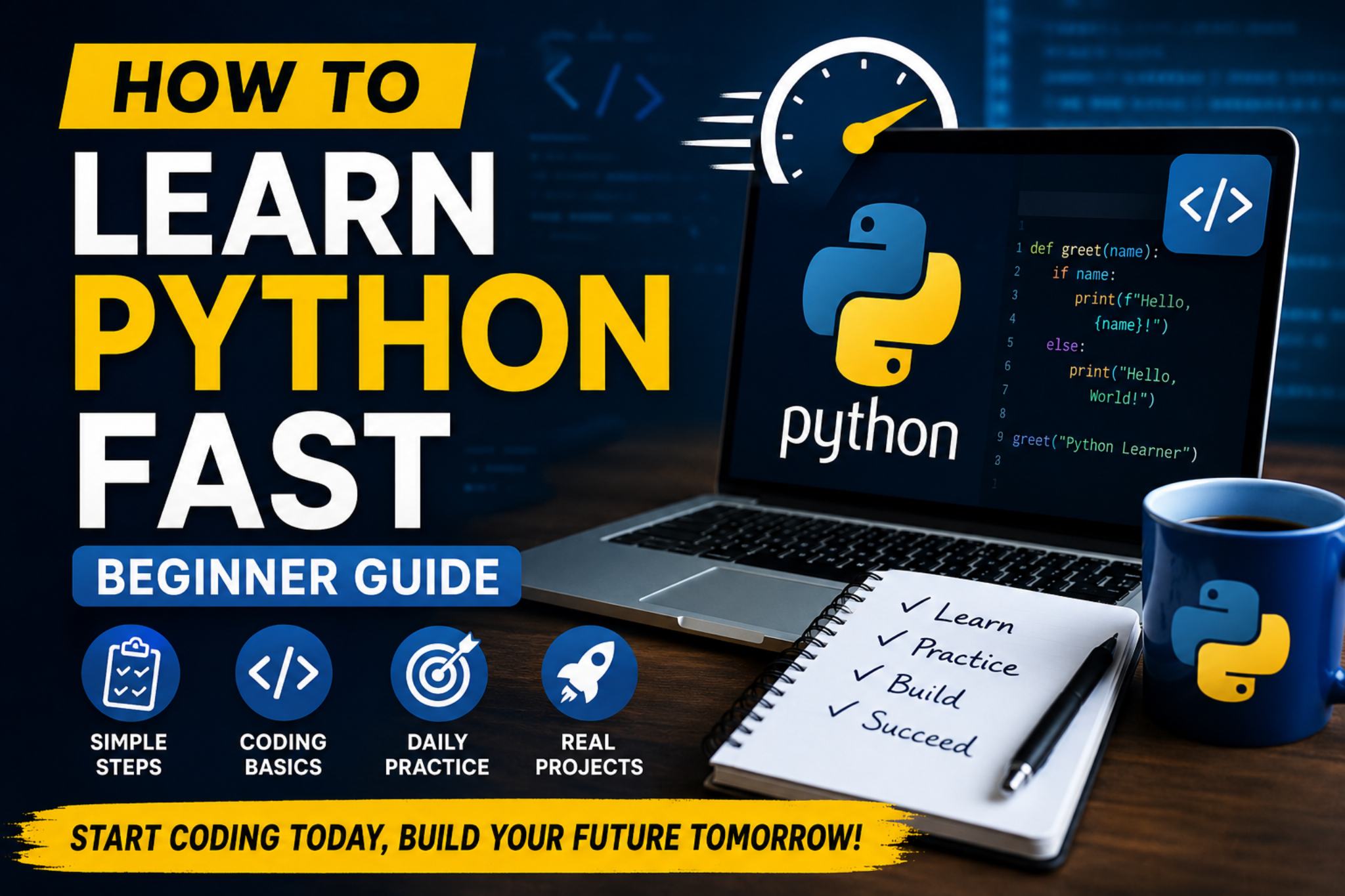
Table of Contents
ToggleIntroduction
How to learn Python fast is one of the most popular questions among students, beginners, freelancers, and future software developers. Nowadays, Python has become one of the world’s most widely used programming languages because it is simple, powerful, and beginner-friendly. As a result, millions of people are learning Python for web development, artificial intelligence, automation, cybersecurity, data science, and software engineering.
At first, programming may look difficult and confusing. However, Python makes coding easier because its syntax is clean and easy to understand. In contrast to many other programming languages, Python uses simple English-like commands. Therefore, beginners can focus more on logic and problem-solving instead of complicated syntax rules.
Moreover, Python is highly flexible and works on multiple platforms including Windows, Linux, and macOS. Because of this flexibility, companies, universities, and technology experts continue using Python in different industries around the world.
Although becoming an expert programmer takes time, beginners can still learn Python quickly with the right strategy. Therefore, if you follow a proper roadmap, practice daily, and build projects consistently, you can improve your coding skills much faster.
This guide explains how to learn Python fast using beginner-friendly methods, daily practice techniques, coding projects, free learning resources, and career-focused strategies.

What is Python?
Python is a high-level programming language created by Guido van Rossum and officially released in 1991. It was designed to make programming easier, cleaner, and more readable for developers.
Unlike many complicated programming languages, Python focuses on simplicity. Consequently, beginners can easily understand Python code even without previous coding experience.
Furthermore, Python supports different programming styles including:
- object-oriented programming
- procedural programming
- functional programming
In addition, Python is open-source, which means developers can use it freely without licensing costs.
Today, Python is widely used in:
- artificial intelligence
- machine learning
- web development
- automation
- robotics
- game development
- cybersecurity
- data science
- cloud computing
Because Python has become extremely versatile, it now remains one of the most valuable programming languages worldwide.
Why Beginners Want to Learn Python Fast
Many beginners want to learn Python fast because the technology industry is growing rapidly. Nowadays, businesses depend heavily on software, automation, websites, and artificial intelligence systems. Consequently, programming skills have become more valuable than ever before.
Python is especially popular among beginners because it reduces complexity during the learning process. For example, tasks requiring many lines in other languages can often be completed in fewer lines using Python.
Additionally, Python has a huge online community. Therefore, beginners can easily find tutorials, coding examples, solutions, and project ideas online.
Another major reason is career opportunities. Python developers are currently in high demand across multiple industries. As a result, learning Python may help students build freelancing careers, remote jobs, or software development careers in the future.
How to Learn Python Fast for Complete Beginners
Learning Python quickly requires consistency, planning, and practical coding experience. However, many beginners waste time because they follow random tutorials without a clear roadmap. Therefore, having a structured learning plan is extremely important.
Daily Practice Tips to Learn Python Fast
Daily practice is one of the most important factors in learning programming quickly. Even if you study only one hour daily, consistent practice will improve your coding skills significantly over time.
Useful daily habits include:
- solving coding exercises
- rewriting example programs
- debugging errors
- practicing loops and functions
- building small projects
Furthermore, daily practice improves:
- coding memory
- logical thinking
- debugging ability
- problem-solving speed
- coding confidence
Therefore, beginners should create a regular study routine instead of studying randomly.
Best Free Resources to Learn Python Fast
The internet provides thousands of Python tutorials and learning platforms. However, beginners should choose reliable and beginner-friendly resources.
Popular free resources include:
- W3Schools
- freeCodeCamp
- Codecademy
- GeeksforGeeks
- HackerRank
- YouTube tutorials
Moreover, Python’s official documentation is also extremely useful for learning advanced concepts.
Because these platforms provide coding exercises and explanations, beginners can improve both theory and practical skills simultaneously.
Best Methods to Learn Python Fast
Many students fail to learn programming efficiently because they spend too much time watching tutorials without coding practically. Consequently, they struggle when trying to write programs independently.
Therefore, beginners should follow effective learning methods instead of relying only on videos.
Beginner Roadmap to Learn Python Fast
Beginners should first focus on understanding core Python concepts including:
- variables
- data types
- conditions
- loops
- functions
- lists
- dictionaries
These concepts form the foundation of programming. Consequently, strong fundamentals make advanced topics easier later.
After learning the basics, students should gradually move toward:
- coding exercises
- mini projects
- debugging practice
- automation scripts
- advanced Python topics
Additionally, beginners should revise previous concepts regularly because revision improves long-term understanding.
Common Mistakes While Trying to Learn Python Fast
Many beginners make avoidable mistakes during the learning process. Therefore, understanding these mistakes can save time and improve progress.
One major mistake is tutorial addiction. Some learners continuously watch tutorials but rarely write code themselves. However, programming skills mainly improve through practice.
Another common mistake is fearing coding errors. In reality, programming errors are completely normal. Even professional developers regularly face bugs and debugging challenges.
Furthermore, many beginners skip basic concepts and directly jump into advanced topics. As a result, they later struggle with complex projects.
Therefore, beginners should focus on building strong fundamentals before moving toward advanced technologies.
Simple Coding Projects to Learn Python Fast
Projects help beginners transform theory into practical experience. Moreover, projects improve creativity, confidence, and coding ability.
Useful beginner projects include:
- calculator applications
- to-do list programs
- number guessing games
- password generators
- simple automation scripts
For example, a calculator project helps students practice:
- user input
- conditions
- arithmetic operations
- functions
Similarly, a to-do list project introduces:
- lists
- file handling
- menus
- user interaction
Consequently, projects help beginners understand how programming works in real-world situations.
Career Opportunities After You Learn Python Fast
Python skills create many career opportunities across different industries. Nowadays, companies actively hire Python developers because of increasing demand for automation and artificial intelligence technologies.
Popular Python careers include:
- software developer
- AI engineer
- web developer
- cybersecurity analyst
- automation engineer
- data scientist
- machine learning engineer
Furthermore, freelancing opportunities are also increasing rapidly.
Platforms such as:
- Fiverr
- Upwork
- Freelancer
allow Python developers to work with international clients online.
Consequently, learning Python may help students develop both technical and financial opportunities.
Learn Python Fast for Artificial Intelligence
Python has become one of the most important programming languages for artificial intelligence and machine learning. Therefore, many students specifically learn Python for AI careers.
Popular Python AI libraries include:
- TensorFlow
- PyTorch
- NumPy
- Pandas
- Scikit-learn
These libraries help developers build:
- chatbots
- recommendation systems
- automation tools
- image recognition software
- predictive systems
As artificial intelligence continues growing worldwide, Python developers will likely remain in high demand.
Learn Python Fast for Web Development
Python is also widely used in web development through frameworks such as:
- Django
- Flask
- FastAPI
These frameworks help developers build:
- blogs
- business websites
- eCommerce stores
- APIs
- dashboards
- management systems
Moreover, Python web frameworks simplify development compared to many traditional methods.
Because online businesses continue expanding globally, web development remains one of the most valuable technical skills today.
Freelancing Opportunities After You Learn Python Fast
Freelancing allows Python developers to work independently from anywhere in the world. Consequently, many beginners start freelancing after learning basic programming skills.
Python freelancers commonly work on:
- automation projects
- website development
- debugging tasks
- API integration
- data analysis
Additionally, freelancing helps beginners gain practical experience while earning income online.

Best Way to Practice Python Daily
Practice remains essential for programming success. Although tutorials help explain concepts, practical coding develops real skills.
Useful daily practice methods include:
- solving coding problems
- participating in coding challenges
- rewriting programs
- debugging errors
- improving existing projects
Furthermore, coding regularly improves:
- logic building
- typing speed
- debugging confidence
- memory retention
Therefore, consistent practice is one of the fastest ways to improve programming ability.
Learning Python for Artificial Intelligence
Artificial intelligence has become one of the fastest-growing technology fields worldwide. Consequently, Python remains extremely important because most AI systems use Python-based tools and libraries.
Python allows developers to create:
- AI chatbots
- voice assistants
- recommendation systems
- automation tools
- predictive software
Moreover, Python simplifies machine learning development compared to many other programming languages.
Because businesses increasingly depend on automation and AI, Python developers will likely continue receiving excellent career opportunities.
Learning Python for Web Development
Web development remains another major field for Python programmers. Nowadays, businesses depend heavily on websites and online services. Consequently, Python developers are needed to create and manage digital platforms.
Python frameworks help developers build websites quickly and efficiently. In addition, Python simplifies backend development and API creation.
Because digital businesses continue growing globally, Python web development skills remain highly valuable for freelancers and software developers.
Online Communities for Python Learners
Programming communities help beginners learn faster by providing discussions, coding help, and project ideas.
Popular communities include:
- Stack Overflow
- Reddit Python groups
- GitHub
- Discord coding communities
Additionally, interacting with other programmers often improves motivation and practical understanding.
Therefore, beginners should participate in online coding communities whenever possible.
Future of Python Programming
Python continues growing rapidly because of automation, artificial intelligence, and data science expansion. Consequently, Python will likely remain one of the world’s most important programming languages for many years.
Many educational institutions now teach Python because it is beginner-friendly and practical. Furthermore, companies increasingly use Python for software development, automation, and AI systems.
Because technology continues evolving, Python developers may continue receiving strong career opportunities worldwide.

Conclusion
Learning how to learn Python fast requires consistency, patience, and practical coding experience. Although programming may initially feel difficult, Python makes learning easier because of its simple syntax and beginner-friendly structure.
Furthermore, Python provides excellent opportunities in artificial intelligence, automation, web development, cybersecurity, and freelancing. Consequently, students who learn Python today may benefit from strong future career opportunities.
Beginners should focus on:
- daily practice
- coding projects
- problem-solving
- strong fundamentals
- consistent learning
Most importantly, students should avoid quitting after small difficulties because programming improves gradually through regular practice and experimentation.
Therefore, if you follow a proper roadmap and continue practicing consistently, you can successfully learn Python quickly and build valuable technical skills for the future.
Internal Links
External Links
Disclaimer
This article is for informational and educational purposes only. Learning speed and programming progress may vary depending on consistency, practice methods, and individual learning ability.
FAQ Section
Is Python difficult for beginners?
No, Python is considered one of the easiest programming languages for beginners because its syntax is simple and readable.
How many hours should I practice Python daily?
Practicing 1–2 hours daily consistently can help beginners learn Python much faster.
Can I learn Python without a computer science degree?
Yes, many successful Python developers are self-taught through online resources and practical coding experience.
Is Python useful for freelancing?
Yes, Python is widely used in freelancing for automation, web development, scripting, and data analysis projects.
What is the best age to learn Python?
People of all ages can learn Python successfully. Many students start during school, while adults also learn Python for career growth and freelancing opportunities.

Gul Fahad is the founder of Readsinfo and a content creator focused on Artificial Intelligence, Technology, Online Earning, and Education. He shares practical guides, digital learning resources, and real-world insights to help readers develop valuable skills and stay updated with modern trends.