
How to Factory Reset an Android Phone Safely: Step-by-Step Guide
Starting Intro If your Android phone has become slow, keeps freezing, crashes frequently, or you’re planning to sell it, performing a factory reset Android phone process can help restore it to its original condition. A factory reset removes your personal data, installed apps, and customized settings, giving your device a fresh start. However, resetting your…
Starting Intro
If your Android phone has become slow, keeps freezing, crashes frequently, or you’re planning to sell it, performing a factory reset Android phone process can help restore it to its original condition. A factory reset removes your personal data, installed apps, and customized settings, giving your device a fresh start.
However, resetting your phone without proper preparation can lead to permanent data loss or activation lock issues. That’s why it’s essential to back up your important files, charge your device, and understand what happens during the reset process.
In this guide, you’ll learn how to factory reset an Android phone safely, when you should do it, and the precautions to take before and after resetting your device.
What Is a factory reset android phone?
A factory reset is the process of restoring your Android phone to its original factory settings. It removes all personal data, installed apps, downloaded files, and custom settings while keeping the Android operating system installed.
After the reset is complete, your phone starts like a brand-new device, requiring you to complete the initial setup process again.
A factory reset is one of the most effective solutions for fixing serious software issues, improving performance, or preparing a phone for a new owner.
When Should You Factory Reset Android Phone?
Although a factory reset is a powerful troubleshooting method, it should only be used when other basic solutions haven’t fixed the problem.
Phone Is Running Very Slow then factory reset android phone
Over time, unused apps, temporary files, and background processes can slow down your Android phone. If clearing storage and restarting the device don’t improve performance, a factory reset may help restore its speed.
Frequent App Crashes
If multiple apps keep crashing even after updating them, corrupted system files or software conflicts could be causing the issue. Resetting your phone often resolves these problems.
Persistent Software Problems so factory reset android phone
Random restarts, frozen screens, boot loops, or recurring error messages may indicate serious software corruption. A factory reset can remove damaged settings and restore system stability.
factory reset android phone Before Selling or Giving Away
Before selling, donating, or recycling your Android phone, always perform a factory reset to remove your personal information, including:
- Photos and videos
- Contacts
- Messages
- Email accounts
- Banking apps
- Saved passwords
- Personal documents
This helps protect your privacy and ensures the next owner receives a clean device.
Malware or Virus Infection
If your phone remains infected despite using antivirus software, a factory reset is one of the most effective ways to remove malware and start with a clean system.
Things to Do Before Factory Resetting an Android Phone
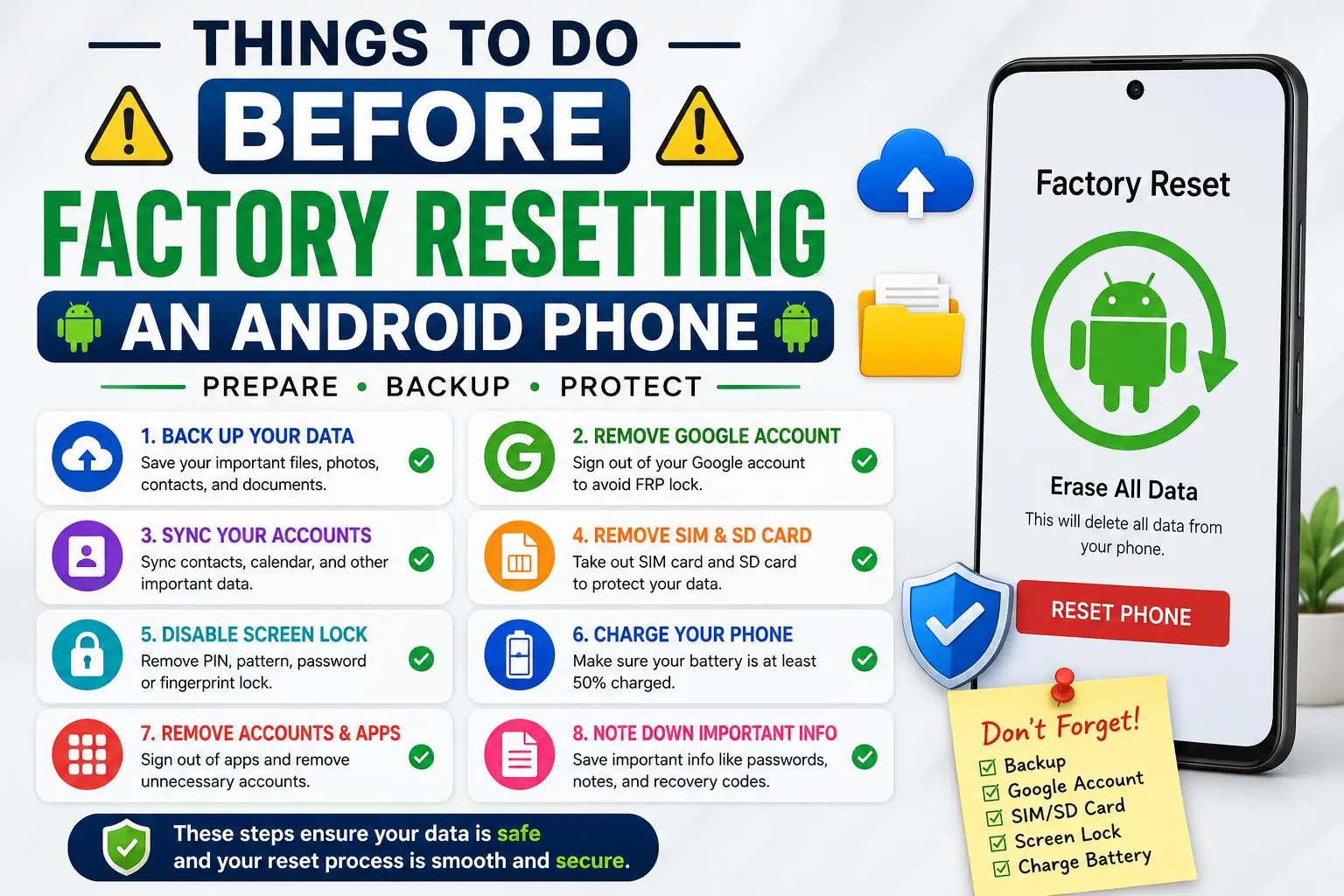
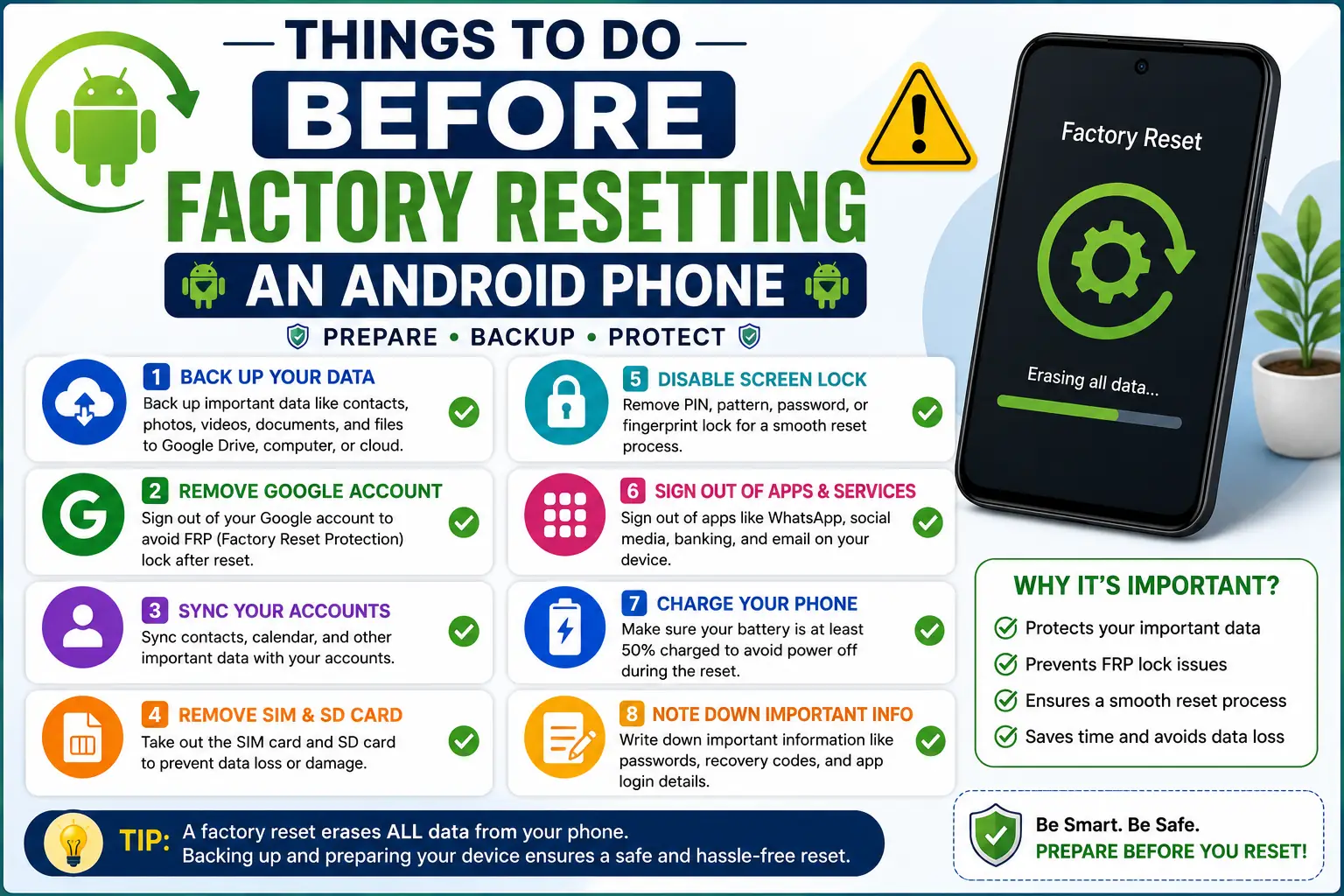
Preparing your device before performing a factory reset helps prevent data loss and avoids setup problems later.
Back Up Your Important Data before factory reset android phone
Before resetting your phone, create a backup of your important files, including contacts, photos, videos, documents, and messages. You can use Google Backup or another trusted cloud or local backup solution.
Charge Your Battery
Make sure your phone has at least 50% battery, or keep it connected to a charger during the reset process. This reduces the risk of interruption while the device is resetting.
Remove Your Google Account (If Selling the Phone)
If you’re giving your phone to someone else, remove your Google account before performing the reset. This prevents Factory Reset Protection (FRP) from locking the new owner out of the device.
Sign Out of Important Apps
Log out of banking apps, email accounts, payment services, and other sensitive applications before resetting your phone. This makes it easier to sign in again after the reset and helps protect your personal information.
How to factory reset android phone Through Settings
The easiest and safest way to factory reset an Android phone is through the Settings app. Most Android devices, including Samsung, Google Pixel, Xiaomi, OnePlus, Motorola, Oppo, Vivo, and Realme, follow a similar process, although some menu names may vary slightly.
Before you begin, ensure that you’ve backed up your important data and that your phone has at least 50% battery remaining.
Step 1: Open the Settings App
Unlock your phone and open the Settings app from your home screen or app drawer.
Step 2: Go to System or General Management
Scroll down and tap one of the following options, depending on your phone’s brand:
- System
- General Management
- Additional Settings
- About Phone
Step 3: Select Reset Options
Look for Reset, Reset Options, or Backup & Reset, then tap it.
Step 4: Choose Factory Data Reset
Select Factory Data Reset. Your phone will display a summary of everything that will be erased, including:
- Installed apps
- Photos and videos
- Contacts stored on the device
- Messages
- Downloaded files
- Device settings
Review the information carefully before proceeding.
Step 5: Confirm the Reset
Tap Erase All Data, Reset Phone, or Delete Everything. Depending on your security settings, you may be asked to enter your PIN, password, or fingerprint.
The reset process usually takes between 5 and 15 minutes. Once complete, your phone will restart and display the initial setup screen.
How to factory reset android phone Using Recovery Mode
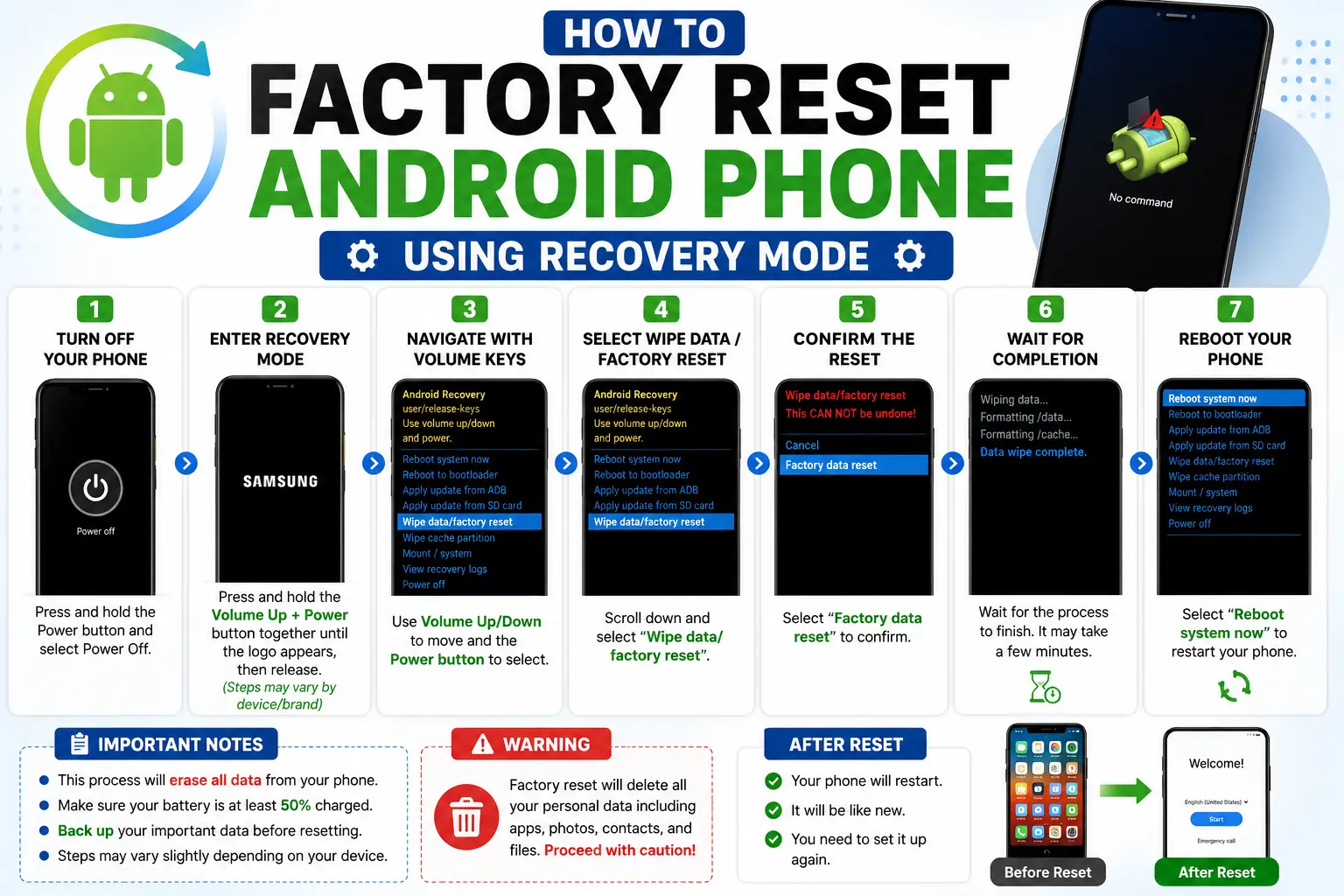
If your phone is frozen, stuck in a boot loop, or you can’t access the Settings app, you can perform a factory reset using Recovery Mode.
Step 1: Turn Off Your Phone
Completely power off your Android device.
Step 2: Enter Recovery Mode
Press and hold the correct button combination for your device. Common combinations include:
- Volume Up + Power
- Volume Down + Power
- Volume Up + Power + Home Button (older Samsung devices)
Keep holding the buttons until the Recovery Mode menu appears.
Step 3: Navigate to Wipe Data/Factory Reset
Use the Volume buttons to move through the menu and highlight Wipe Data/Factory Reset.
Step 4: Confirm Your Selection
Press the Power button to select the option, then choose Yes to begin the factory reset.
Step 5: Reboot Your Device
After the reset is complete, select Reboot System Now. Your phone will restart and launch the Android setup screen.
Note: Recovery Mode menu options may vary slightly depending on your phone manufacturer and Android version.
How to factory reset android Samsung phones
Samsung Galaxy devices use the One UI interface, but the reset process is simple.
Using the Settings App
- Open Settings.
- Tap General Management.
- Select Reset.
- Tap Factory Data Reset.
- Review the information displayed.
- Tap Reset.
- Select Delete All.
- Enter your PIN or password if prompted.
Your Samsung phone will restart and restore itself to factory settings.
How to factory reset android phone Google Pixel
Google Pixel devices use a clean version of Android, making the process straightforward.
Steps for Google Pixel
- Open Settings.
- Tap System.
- Select Reset Options.
- Tap Erase All Data (Factory Reset).
- Confirm your choice.
- Enter your screen lock if requested.
- Tap Erase All Data.
Your Pixel phone will erase all personal information and restart automatically.
What Happens After a factory reset android phone?
After successfully performing a factory reset Android phone process, your device returns to its original factory state.
Here’s what you can expect:
- All installed apps are removed.
- Personal files, photos, videos, and downloaded documents are deleted.
- Device settings return to their default values.
- Google accounts and saved passwords are removed.
- The phone restarts with the welcome screen, just like a brand-new device.
If you created a backup before resetting, you can restore your contacts, apps, photos, and other supported data during the setup process.
A factory reset can significantly improve performance by removing unnecessary files, software conflicts, and corrupted settings. However, it won’t fix hardware-related problems such as a damaged battery, faulty display, or broken charging port.
Factory Reset vs Restart: What’s the Difference?
Many people think restarting a phone and performing a factory reset are the same, but they serve completely different purposes. A restart simply refreshes your device by turning it off and back on, while a factory reset permanently erases all your personal data and restores the phone to its original factory settings.
The table below highlights the key differences.
| Feature | Restart | Factory Reset |
|---|---|---|
| Deletes Personal Data | ❌ No | ✅ Yes |
| Removes Installed Apps | ❌ No | ✅ Yes |
| Fixes Minor Software Issues | ✅ Yes | ✅ Yes |
| Fixes Major Software Problems | ❌ Limited | ✅ Yes |
| Restores Factory Settings | ❌ No | ✅ Yes |
| Requires Device Setup Again | ❌ No | ✅ Yes |
| Time Required | 1–2 Minutes | 5–15 Minutes |
If your phone only feels slow or an app isn’t responding, restarting the device is usually enough. However, if you’re facing persistent software issues or preparing your phone for sale, a factory reset is the better option.
Common
A factory reset is a safe process when performed correctly. However, many users make simple mistakes that can lead to unnecessary problems or permanent data loss.
Forgetting to Back Up Important Data
The biggest mistake is resetting the phone without creating a backup. Once the reset is complete, deleted files cannot usually be recovered.
Always back up:
- Photos and videos
- Contacts
- Documents
- Messages
- Important app data
Not Charging the Phone
A low battery during the reset process may interrupt the operation. Although uncommon, this can sometimes cause software issues.
Ensure your phone has at least 50% battery or keep it connected to a charger.
Forgetting Your Google Account Password
After a factory reset, Android may ask you to sign in with the Google account previously linked to the device because of Factory Reset Protection (FRP).
Before resetting your phone, make sure you know your Google account email address and password.
Removing the SIM Card Instead of Backing Up Data
Some users believe removing the SIM card protects their data. In reality, your photos, apps, and files are stored in your phone’s internal storage, not on the SIM card.
Always create a proper backup before resetting.
Resetting Without Trying Other Solutions
A factory reset should be your last troubleshooting step. If your issue is minor, try these solutions first:
- Restart your phone.
- Clear the app cache.
- Update Android.
- Free up storage space.
- Remove recently installed apps.
These methods often solve common performance problems without deleting your data.
Internal Links
| Anchor Text | Link |
|---|---|
| How to Fix Android Phone Overheating Issues | https://readsinfo.com/fix-android-phone-overheating/ |
| Mobile Battery Health Guide | https://readsinfo.com/mobile-battery-health-guide/ (use your actual URL if different) |
| How to Connect Mobile Screen to TV | https://readsinfo.com/connect-mobile-screen-to-tv/ (or your actual slug) |
| How to Use FL Studio for Beginners | https://readsinfo.com/how-to-use-fl-studio/ |
| PlayStation 5 (PS5): Complete Beginner’s Guide | https://readsinfo.com/playstation-5-guide/ |
How to Restore Your Data After a Factory Reset
After completing the setup process, Android gives you the option to restore data from a previous backup.
Restore Using Google Backup
If Google Backup was enabled before the reset, follow these steps:
- Connect your phone to Wi-Fi.
- Sign in using your Google account.
- Select the latest available backup.
- Choose the data you want to restore.
- Wait for the restoration process to finish.
Depending on the size of your backup and internet speed, restoring your data may take several minutes.
Reinstall Your Apps after factory reset android phone
Most apps previously downloaded from the Google Play Store can be reinstalled automatically after signing in with your Google account.
Restore Photos and Videos when finish factory reset android phone
If your photos were backed up to Google Photos or another cloud service, they’ll begin syncing automatically after you sign in.
External Useful Links
| Anchor Text | Official URL |
|---|---|
| Android Help – Reset your Android device | https://support.google.com/android/answer/6088915 |
| Google Account Help (Factory Reset Protection) | https://support.google.com/android/answer/9459346 |
| Samsung Support – Factory Reset Galaxy Phone | https://www.samsung.com/support/ |
| Google Pixel Help Center | https://support.google.com/pixelphone/ |
| Android Developers | https://developer.android.com/ |
Conclusion
Knowing how to factory reset an Android phone safely can help you solve serious software problems, improve performance, or prepare your device for a new owner. While the process is simple, taking a few minutes to back up your data and prepare your device can save you from losing important information.
Before performing a factory reset, always try basic troubleshooting methods such as restarting your phone, updating Android, or clearing app cache. If those solutions don’t work, a factory reset is often the most effective way to restore your phone to a clean and stable state.
By following the steps and safety tips in this guide, you can reset your Android phone with confidence and get it running like new again.
Frequently Asked Questions
Does a factory reset remove everything?
Yes. A factory reset removes your apps, photos, videos, contacts, messages, downloaded files, and custom settings stored on the device. However, it does not remove the Android operating system.
Will a factory reset remove viruses?
In many cases, yes. A factory reset removes most malware and software-based viruses by deleting installed apps and user data. However, it’s still important to install apps only from trusted sources afterward.
How long does a factory reset take?
Most Android phones complete the process within 5 to 15 minutes, depending on the device model and the amount of stored data.
Can I recover my data after a factory reset?
If you created a backup before resetting your phone, you can restore your data during the setup process. Without a backup, recovering deleted data is usually very difficult.
Does a factory reset improve phone performance?
Yes. Removing unnecessary apps, corrupted settings, and accumulated data often improves speed and overall performance, especially on older devices.

Gul Fahad is the founder of Readsinfo and a content creator focused on Artificial Intelligence, Technology, Online Earning, and Education. He shares practical guides, digital learning resources, and real-world insights to help readers develop valuable skills and stay updated with modern trends.